Share
What the Midterms Mean Abroad
Welcome to the Audere Atlas, the Audere Group’s fortnightly update on global geopolitical trends, how we engage with them, and what they mean for your organisation.
This week, we examine what the Democratic sweep of Congress in the 3 November US midterm elections means for US foreign policy, starting with the war against Iran before focusing on Ukraine and Syria. While Congress gains real tools of oversight and funding, foreign policy remains largely in the President’s hands. Partners from Kyiv to Damascus will now face a more contested Washington.
The Audere Atlas offers timely, actionable insights that both support key decision-making and highlight areas for further exploration and understanding.
The Bottom Line
Democratic control of Congress will slow and scrutinise President Trump’s foreign policy, not redirect it. Expect pressure to end the Iran war, a cooler line on Israel and tougher oversight, alongside a lame-duck President more active abroad. Ukraine should expect little near-term relief, with a Trump–Putin meeting in Shenzhen on 18–19 November an early test. Syria’s sanctions relief should hold, but with more conditions. Businesses should plan for volatility and closer scrutiny of politically connected deals.
The Brief
On 3 November, American voters handed the Democrats control of both houses of Congress in the biggest opposition landslide since 1974. Democrats have won at least 55 of the 100 Senate seats, taking traditional Republican strongholds such as Texas, Kansas and Mississippi. In the House they hold around 255 seats, well above the 218 needed for a majority. Exit polls ranked corruption (55%), the cost of living (49%) and the war against Iran (34%) as voters’ crucial issues. Vice President JD Vance was blunter: “the reason we lost is the war”.
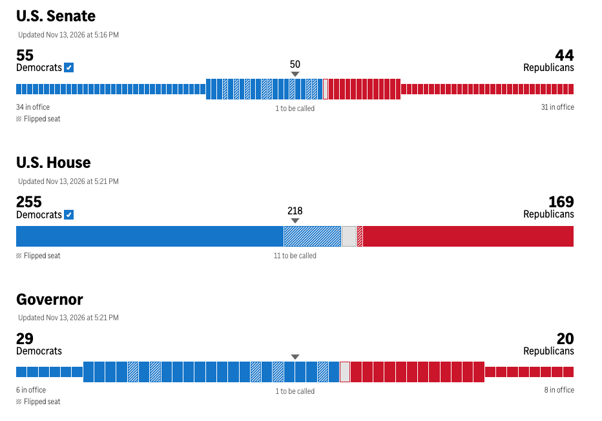
(Figure 1: The new balance of power in Congress)
The election was, unusually, a verdict on foreign policy. The Iran war, launched in February at an estimated cost to US taxpayers of $47bn so far, reached voters through soaring fuel prices. Democrats may use a government funding deadline on 11 December and a stalled defence bill as leverage to end it, and Trump has said he has no immediate plans to strike Iran again. Support for Israel is now contested in both parties: on election morning Trump said the US would end its annual military aid, and the new majority includes senators pressing to condition arms sales. Yet the broad coordinates of Trump’s worldview are unlikely to shift. Blocked at home, lame-duck presidents tend to turn abroad. Expect a more impulsive Trump, not a chastened one.
Ukraine enters this period weaker in Washington than at any time since 2022. In September, Congress passed the Lindsey O. Graham Sanctioning Russia and Iran Act, allowing tariffs of up to 500% on Russian imports and secondary tariffs on the largest buyers of Russian energy. In mid-October, days before it took effect, Trump waived its sanctions, alongside a deal to purchase Russian diesel. Kyiv also accuses Washington of delaying interceptor deliveries, and Trump has called on President Volodymyr Zelenskyy to step down. Democrats can hold hearings on the waivers, attach Ukraine provisions to must-pass bills and contest any move to lift Russia sanctions: under the Act, a termination tied to a peace certification can be blocked by a congressional resolution of disapproval within 30 days. New weapons will remain scarce, however, as rebuilding America’s own depleted munitions stocks already stretches its defence industry. The immediate signal of whether there will be a change in approach to Ukraine following the midterms comes on 18–19 November, when Trump is expected to meet President Vladimir Putin, and possibly Xi Jinping, at the APEC summit in Shenzhen. Ukraine will not be at the table.
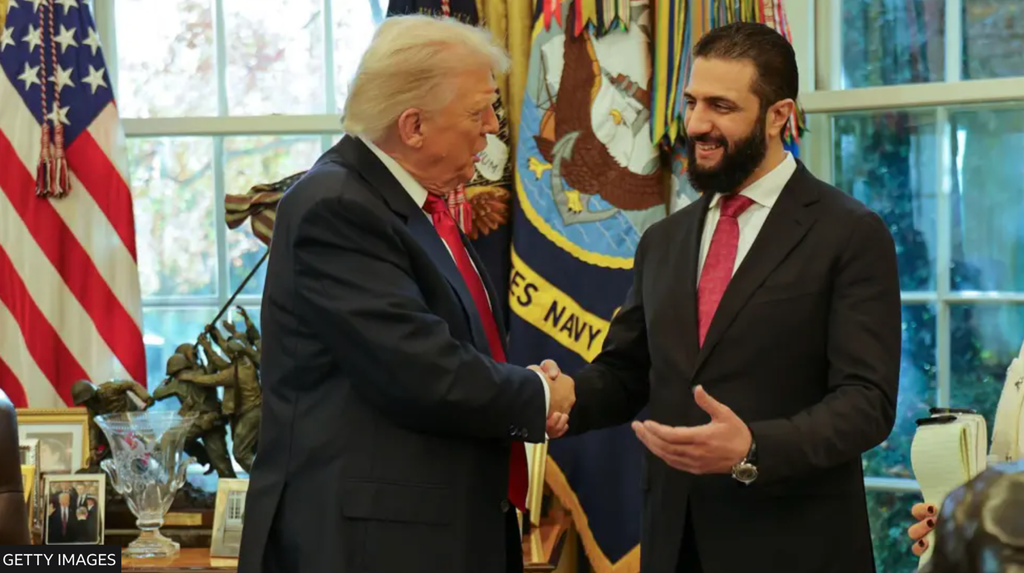
(Figure 2: Trump and Al-Shara’a in the Oval Office)
Damascus, by contrast, has secured almost everything it asked of Washington: the Caesar Act was repealed in December 2025, US forces handed over their major bases in April, and on 24 August Syria came off the US list of state sponsors of terrorism after 47 years. These gains rest heavily on Trump’s personal rapport with President Ahmed al-Sharaa and on his envoy, Tom Barrack. Democrats are expected to keep backing engagement, but to attach conditions on Kurdish integration, the protection of minorities and accountability for past violence. Two older sanctions laws, from 2003 and 2012, still await repeal in the Senate, giving the new Congress leverage.
So What?
The midterms change how US foreign policy is made, not who makes it. The new Congress sits on 3 January 2027. It gains the power of the purse, the power of subpoena and, in the Senate, the power to block the President’s nominees. It does not gain a veto-proof majority. Congress can slow Trump’s foreign policy, as former congressional aide James Green puts it, and “maybe make it put on a turn signal”, but it will struggle to change its route. Expect slower decisions, more hearings and more conditions, but also a President with fewer outlets at home and a stronger pull towards deal-making abroad.
For organisations operating in Ukraine and Syria, the main risk is less a change of course than volatility: policy set through personal diplomacy, then contested by a hostile Congress. Partners whose position rests on access to Trump himself, from the Gulf to Damascus, are the most exposed.
The Iran war is where the new Congress will push hardest, and the risks cut both ways. Pressure from Democrats, and from Republicans wary of 2028, makes a negotiated exit more likely. But a President facing two years of frustration may decide that the only way out is to win, and US forces remain positioned for renewed strikes. Even a settlement would bring slow relief: governments must refill depleted oil reserves, and about a tenth of global refining capacity was offline at the end of October because of the wars in Iran and Ukraine. Firms with operations or shipping in the Gulf should plan for both outcomes, and for energy costs that stay high into 2027.
Organisations exposed to Ukraine should not expect a revival of US support before 2027, but policy may be volatile. An understanding between Trump and Putin reached over Kyiv’s head could bring pressure for territorial concessions and a rapid easing of US sanctions on Russia. This does not appear likely, and we may indeed see a Democratic Congress pursue a different approach, including, in the short term, pushing to remove the waivers on Russian oil products, which many Republicans also support. Compliance teams should model both directions. Counterparties trading in Russian energy, shipping or dual-use goods remain the highest-risk category.
In Syria, the question for investors is durability. The biggest gains are hard to reverse, and the US Treasury now lets American banks process payments involving Syrian banks, provided no sanctioned party is involved. But targeted sanctions on Assad-era figures, Islamic State and Iranian-linked networks remain, and those networks still run through the economy. Deals agreed at the White House may now slow under budget and transparency requirements, and investors will want assurance that the opening survives changes of personnel. The security picture is also unsettled. In October alone there were near-daily Israeli incursions in Quneitra and Daraa, sabotage of a gas pipeline in Hasakah and a deadly raid on an Islamic State cell near Damascus, while Suwayda remains largely outside state control.
Audere Group can help clients navigate this environment. Our enhanced due diligence, drawing on sanctions screening, beneficial ownership verification, PEP identification and link analysis, test Syrian and Ukraine-related counterparties for ties to designated persons or Russian-linked networks. For firms entering Syria’s reconstruction economy, market entry due diligence and ongoing monitoring, including business partner screening, help them choose partners with confidence. And as the security picture shifts in the Gulf, Syria and Ukraine, our security risk management and travel risk management services help protect staff and assets on the ground.
Across all these markets, deals struck through proximity to the administration will attract scrutiny: the incoming chair of the House Oversight Committee greeted the result with two words, “lawyer up”. Firms relying on politically connected intermediaries should review those relationships now. Washington has new brakes, but the same driver. For the next two years, decisions on Tehran, Kyiv and Damascus will still be made in the White House, but they will be tested more often, reversed more easily and examined more closely. Organisations that plan for that volatility, rather than for any single outcome, will be best placed to manage it.
Keen to Know More?
The Audere Group is an intelligence and risk advisory firm offering integrated solutions to companies in complex situations.
We specialise in mitigating the financial, reputational and physical risks faced by our clients in markets across the world through a 360-degree range of services incorporating security advisory, crisis management and strategic intelligence to inform decision making around transactions, supply chains and disputes.
Contact us to learn how our bespoke risk advisory services can work with your unique circumstances to navigate high-risk environments and changing landscapes through the provision of hard-to-reach intelligence and clear analysis.
Disclaimer: The content of this report is for informational purposes only and does not constitute legal or financial advice. For further details or specific inquiries, please reach out to our team directly.